Cool! I just dowloaded my new Google Toolbar 2.0. I like the Blog This feature. (head's up from MarketingFix)
June 27, 2003


June 26, 2003
June 25, 2003
MarketingFix Sells Out
jheez, that didn't take too long. Going by the tag line, "Independent eMarketing News (Until We Sell Out)" MarketingFix sold out to Andy Bourland (if you're going to sell out to anyone, it might as well be this guy ... founder of ClickZ, when it was really good). But in all seriousness, congratulations to the guys, I hope the site's style keeps up.
Andy formed a new company, Up2Speed, also acquired Adventive, an online discussion group. According to Rafat Ali's scoop, Andy hopes to use"the mix of vertical-focused weblogs and e-mail newsletters/discussion group ... [to] cross promote the sites through the discussion lists and vice-versa, with ad revenues coming in from both ends."
hmmm.... this is the first time I know of that a blog has been bought.
Looking forward to how it plays out.
[later] -- Marketing Fix has more here.
[later later] so does Andy.
Andy formed a new company, Up2Speed, also acquired Adventive, an online discussion group. According to Rafat Ali's scoop, Andy hopes to use"the mix of vertical-focused weblogs and e-mail newsletters/discussion group ... [to] cross promote the sites through the discussion lists and vice-versa, with ad revenues coming in from both ends."
hmmm.... this is the first time I know of that a blog has been bought.
Looking forward to how it plays out.
[later] -- Marketing Fix has more here.
[later later] so does Andy.
June 24, 2003
Wall Street Journal Media & Marketing Edition
WSJ has started a special edition covering Media & Marketing. [later] not really new and seperate, but still a good place for info...
June 17, 2003
Can anyone recommend any books or reading on web usability and/or information architecture? If so, could you be so kind as to use my nifty comments below...
Here are a few blogs I found on Google:
Croc o' Lyle
Designing Usability
Usability and Suman kumar
Elegant Hack
Here are a few blogs I found on Google:
Croc o' Lyle
Designing Usability
Usability and Suman kumar
Elegant Hack
June 16, 2003
Good business blog piece as a follow up to the Jupiter/ClickZ Blog Conference by Rebecca Lieb in ClickZ.
As I write this on Thursday, the event, and blogs about the event, still dominate Popdex's Web site popularity index (starting at number three) -- even though the conference ended Tuesday....That's reach, frequency, and targeting....
If your organization has staff with the vision, thought leadership, and evangelistic qualities that could make for a good marketing blog, make certain that person checks strategy at the door before posting the first entry. Blogs are good for supporting an agenda or idea, but they aren't a strategy or an end in themselves when used in a business context. Blogs must be personal, an open loop, and, above all, honest.
June 15, 2003
Actual Business Blogs
Rick brings up a good point ..... lots of talk, but no walk when it comes to business blogs. While I think we're still in the pioneering stages (heck still in the ideas stages), there has been a lot of talk on business blogs. I've been as guilty as anyone ... talking about applications but not having any clients to show for it (although I haven't been seeking any).
But Rick is walking the talk. He posted clients he has set up weblogs for: BizNetTravel and Roundtable Communications. Of course Marcromedia was one of the first, and so was Dr. Pepper and who can forget Barbie. I'd also say that Dave Winer and the whole Radio Userland group is a prime example of business blogs .... although they've never been billed as such. Fellow DC area blogger, James Robertson, blogs for his company Cincom SmallTalk. You might be saying, so what's the big deal, sounds like there're lots of companies out there. Dr. Pepper didn't get it. Barbie is purely fictional. And most other business blogs are from software/tech companies. Rick's are some of the first to break outside of the tech arena.
But Rick is walking the talk. He posted clients he has set up weblogs for: BizNetTravel and Roundtable Communications. Of course Marcromedia was one of the first, and so was Dr. Pepper and who can forget Barbie. I'd also say that Dave Winer and the whole Radio Userland group is a prime example of business blogs .... although they've never been billed as such. Fellow DC area blogger, James Robertson, blogs for his company Cincom SmallTalk. You might be saying, so what's the big deal, sounds like there're lots of companies out there. Dr. Pepper didn't get it. Barbie is purely fictional. And most other business blogs are from software/tech companies. Rick's are some of the first to break outside of the tech arena.
June 13, 2003
June 12, 2003
I call a Re-do
Devine, a company who went on an acquisition spree at the end of the bubble, buying up Internet and technology companies went bankrupt last year. The ironic part, those companies they bought for millions in stock are now being bought back by their original founders. For example, David Suess "regained the search-engine company he had founded in 1985 and sold to Divine last year, Northern Light, for a mere $81,000, about half a penny on the dollar of what Divine paid for it." I like the fact that these people are getting a second chance because there were some truly great ideas that went bust because many of the companies that went acquiring everything with a .com at the end of it didn't have a business plan or understanding of the capacity of the internet to save their lives.
Follow Up on ClickZ/Jupiter Blog Conference
Rex Hammock has a truley thoughtful look back on the Blog Conference and the past, present and future of blogging and "push-botton knowledge management." His tenth thought is my favorite:
(link via Doc)
Weblogs and personal journalism are never going to be a threat to Adweek or Advertising Age like several people implied (as an example) today. This is one of the few times where I have been up close and personal to a decade-long series of such predictions regarding the demise of century-old B2B media companies and have, at the same time, known personally the people who run and own those companies. I only need to mention the company Vertical Net to remind folks that at one time, there was a company with the mythical stock-market value of several billions of dollars that was going to be a threat to all Business to Business media by moving it all to the web. I think it’s great that people are blogging about media and marketing. I am happy to note that I’ve been blogging about magazines for the past two years. But friends, I am never going to be a threat to Folio: with just a weblog. (Not to imply they don’t have threats.) I’m apples, they’re oranges. The world is big enough for me to do what I do for whatever reasons drive me to do it and for them to do likewise. VNU and Crain have nothing to worry about from bloggers threatening their established media properties. That is especially true about Crain Communications (Ad Age, Automotive News, etc.), as Keith and Rance Crain are two of the most unique media executives left in America: They both have voices (very human voices) of authority, integrity and truth and near-radical independence. They mince no words and back down from no one. I doubt they will ever blog, but their decades of commentary about automobiles and advertising are the purest examples of human-voice insight those two industries will ever hear. Come to think of it, however, I think they would blog if they didn't have all those other ways to tell the world what they believe.
(link via Doc)
June 09, 2003
Matrix Re-Loaded (527 times, and counting)
I checked out this thread last week and it was around 300. Jason Kottke's thread on his Matrix posting has everything you need to know and then makes you forget.
June 08, 2003
Wish I was There ClickZ Weblog Business Strategies - LIVE
Here's the agenda for the business blogging conference in Boston (offically titled, ClickZ Weblog Business Strategies). Hoping there'll be much blogging about the blog conference.
The blogroll for the event: (blogging live in bold)
Doc
Dave Winer and here (pics here)
Denise Howell
David Weinberger
Jason Shellen
Windley (Pics!)
Anil
Heath Row
Michael Gartenburg
John Robb
Dan Bricklin
Timothy Appnel(day 2 here)
Bob Frankston
Rick Bruner and here and here, not to mention here
Michael O'Connor Clarke
Beth Goza
Jimmy Gutterman
Biz Stone
Halley Suitt
Mathew Berk
John Robb
Anil Ash
Jeff Jarvis
Timmy Ireland
Paul Perry
Martin Röll
Topic Exchange
Bill Seitz
Debbie Weil I didn't know you had a blog!
Adina Levin
Rex Hammock
Phil Wolff
Vince Mease
The blogroll for the event: (blogging live in bold)
Doc
Dave Winer and here (pics here)
Denise Howell
David Weinberger
Jason Shellen
Windley (Pics!)
Anil
Heath Row
Michael Gartenburg
John Robb
Dan Bricklin
Timothy Appnel(day 2 here)
Bob Frankston
Rick Bruner and here and here, not to mention here
Michael O'Connor Clarke
Beth Goza
Jimmy Gutterman
Biz Stone
Halley Suitt
Mathew Berk
John Robb
Anil Ash
Jeff Jarvis
Timmy Ireland
Paul Perry
Martin Röll
Topic Exchange
Bill Seitz
Debbie Weil I didn't know you had a blog!
Adina Levin
Rex Hammock
Phil Wolff
Vince Mease
June 04, 2003
Wikis
I love learning new stuff like this. In my pursuit to suck up knowledge on social networks I came across something new to me. A Wiki. Okay, we have Blogs. That name is goofy. My parents roll there eyes when I say the word. "Bllloggg?" Wait til I bring home "Wiki." But besides the name, it's sounds like a neat application with practical uses within organizations and companies. I feel like everyone knows about Wikis except me. But in case you're in the dark like me, Ross Mayfield explains:
Jim McGee has more here and here. Thanks Dina for the great Wiki links! (she has even more if you visit her blog).
Wikis let the group voice emerge. Many people participate within a given wiki, each with an equal voice in a shared space that anyone can edit. Its a different act of sharing to contribute your words to a page that others can build upon. Our instinct is to at first believe this would create conflict and distrust, but it actually builds trust. Each wiki page reflects the current consensual understanding of a given concept. A page isn't a complete or perfect understanding, information and conditions change too quickly for it to be possible Instead, a little wabi-sabi and trusting others allows something powerful to emerge and stay current -- a simply powerful tool for collaboration.
We aren't the only one to think of the differences between weblogs and wikis as individual and group voices. Elwin Jenkins describes it as weblogs turn individuals into webpages while wikis turn communities into webpages.
There are lots of similarities between the two tools. Both are web native, are easy to use, are link-intensive and encourage sharing.
Both are being widely adopted, wikis less visibly because of private group use and at different paces in different areas. A customer once explained to me how he thought wikis were more popular than weblogs in Asia because group voice is valued greater than individual voice. Regardless of popularity, different cultures and organizations will have different values that is reflected in their tool selection.
Its not a choice between one or another. The temporal structure of weblogs and logical structure of wikis are a complement for lasting effects. One of the more powerful patterns in an organization is how an opportunity is published in blog, possibilities are swarmed upon in blog conversation and then driven to consensus and outcome in a wikified document. After the outcome, the knowledge and its social context remains.
Jim McGee has more here and here. Thanks Dina for the great Wiki links! (she has even more if you visit her blog).
Social Networks Reading
Liz Lawley lists some recommended reading for Social Software. I'm calling it Social Networks reading because I think it bests describes it.
- Emergence: The Connected Lives of Ants, Brains, Cities, and Software, by Steven Johnson.
- Six Degrees: The Science of a Connected Age, by Duncan Watts.
- Smart Mobs: The Next Social Revolution, by Howard Rheingold.
- Linked: The New Science of Networks, by Albert-László Barabási.
- Small Pieces Loosely Joined, by David Weinberger.
- “The Strength of Weak Ties,” by Mark Granovetter [from the American Journal of Sociology, Vol. 78, No. 6. (May, 1973), pp. 1360-1380.] RIT faculty can retrieve a PDF of this article by going to the JSTOR database via the RIT library, and searching for author=Granovetter and title=weak ties in the Sociology journals.
- The Social Construction of Technological Systems, an excellent collection of essays discussing (among other things) the recursive interrelationships between social contexts and technological tools.
June 03, 2003
Social Networks
A while ago, someone linked to an article in Strategy & Business by Art Kleiner on Karen Stephenson, the social network theorist (okay if you've never heard of this before you're probably getting cold chills because it sounds sooo boring. But stay with me). I had heard of social networks before, mostly in the context of politics and references in some blogs. Of course there is the Tipping Point, but that is only part of the puzzle. It started my curiosity in the implications of social networks in marketing and communications. But since I've read that article I've been a vacuum trying to suck in everything I can on the subject from blogs to articles to books. I believe this is the model that smart communicators will realize in the future (starting now). Everything from marketers to advertisers to publishers to corporate communicators. It even goes beyond communication, and allows us to realize how all the elements connect and work together in any group ... intracompany, customer base, potential customer base, readership, etc. By understanding these connections we can be better marketers, advertisers, publishers, communicators.
So, this is my long-winded way of saying I've started a new section on my blogroll for Social Networks. There are only three now. I really want to focus only on blogs/sites that fully dedicate themselves to social networks and/or social software. So please take a look at:
iWire
Socialtext
SmartMobs (was already on the roll but got relocated)
So, this is my long-winded way of saying I've started a new section on my blogroll for Social Networks. There are only three now. I really want to focus only on blogs/sites that fully dedicate themselves to social networks and/or social software. So please take a look at:
iWire
Socialtext
SmartMobs (was already on the roll but got relocated)
May 29, 2003
Online Divorce?
Apparently so, reports CNN.
Thankfully I'm not worried about this. I'm happily engaged to Amy. Who is, by the way, living it up in Ireland right now on an MBA trip. She says I'd love it because it's all about the Guinness and the pubs. I think she's right.
I wonder how long it will be before Rageboy and Locke call it quits? I wonder how they would decide who kept what on their wedding registry (I guess it's kinda obvious).
For fees ranging from $50 to $300 -- a small fraction of what most lawyers charge even for an uncontested divorce -- couples are being provided with the appropriate forms and varying degrees of help completing them.
The phenomenon is spreading. Rival firms CompleteCase.com and LegalZoom.com each say they have served 20,000 clients nationwide in less than three years of operation. Hits on the divorce section of the California court system's do-it-yourself Web site soared from 6,800 in May 2002 to about 15,000 last month.
Thankfully I'm not worried about this. I'm happily engaged to Amy. Who is, by the way, living it up in Ireland right now on an MBA trip. She says I'd love it because it's all about the Guinness and the pubs. I think she's right.
I wonder how long it will be before Rageboy and Locke call it quits? I wonder how they would decide who kept what on their wedding registry (I guess it's kinda obvious).
May 20, 2003
Corporate Adaptation to Blog Technologies
Hurray. Applause. Thank you very much. Thank you very much to Todd Brehe who might be the first in a marketing publication to give practical, real world, easy-to-use advice corporations can understand in how to adapt to blogging as a form of communications.
"Adapt." That concept has been missing from the lexicon of others writing about integrating blogging into corporate marketing and communication strategies. Todd calls blogs a disruptive technology ... and they really are in terms of the corporate world because as a means of communicating they are far different from the "attractive, expensive, stale, diluted ... corporatespeak" corporations are accustomed to providing. Blogs on the other hand "offer the human voice, which can be loud, controversial, and even wacky. But the realness of the blog inspires trust and piques people’s curiosity. A blog can create a community and a dynamic discussion."
Todd gives us four main benefits of blogs to business:
Blogs Are the “Real Voice" - which "inspires trust and piques people’s curiosity"
Blogs Are Simple - not to mention low cost
Blogs Empower the Individual - a "single person [can] capitalize on the reach and ubiquity of the Web"
Blogs Empower the Enterprise - "knowledge can be organized, distributed, and leveraged to increase the value of product and service offerings to the customer" through knowledgeable and passionate people in the company.
Todd tells us companies
Hence, how and why companies should adapt and start using blogs a means of communicating.
"Adapt." That concept has been missing from the lexicon of others writing about integrating blogging into corporate marketing and communication strategies. Todd calls blogs a disruptive technology ... and they really are in terms of the corporate world because as a means of communicating they are far different from the "attractive, expensive, stale, diluted ... corporatespeak" corporations are accustomed to providing. Blogs on the other hand "offer the human voice, which can be loud, controversial, and even wacky. But the realness of the blog inspires trust and piques people’s curiosity. A blog can create a community and a dynamic discussion."
Todd gives us four main benefits of blogs to business:
Blogs Are the “Real Voice" - which "inspires trust and piques people’s curiosity"
Blogs Are Simple - not to mention low cost
Blogs Empower the Individual - a "single person [can] capitalize on the reach and ubiquity of the Web"
Blogs Empower the Enterprise - "knowledge can be organized, distributed, and leveraged to increase the value of product and service offerings to the customer" through knowledgeable and passionate people in the company.
Todd tells us companies
should understand that controlling the content of the discussion is difficult. If you want an authentic exchange, you have to be willing to accept the stone-throwing and critical comments that often occur in a blog.
This requires extending trust and giving up some of the control a company would normally have when it publishes a press release or hosts its own online forum, for example. The upside is that people will listen to a real voice.
Hence, how and why companies should adapt and start using blogs a means of communicating.
May 16, 2003
For future reading. Dave Pollard has some good stuff (at first glance) on blogs in business.
This is a problem I have frequently. Find something with depth or length that I really want to sink my teeth into, but don't have time. Someone with more technical prowess than myself should create a tool that would allow one to quickly store links they want to reference later. Sort of a short-term Bookmark. Or a Blog Task, similar to Outlook's Tasks.
This is a problem I have frequently. Find something with depth or length that I really want to sink my teeth into, but don't have time. Someone with more technical prowess than myself should create a tool that would allow one to quickly store links they want to reference later. Sort of a short-term Bookmark. Or a Blog Task, similar to Outlook's Tasks.
May 15, 2003
Are You David Nelson?
If so, you're on "the list." From Boing Boing (full article here):
There are approx. 37,900 search results for "David Nelson" on Google.
David Nelson of Gresham says he was searched and screened three times at the Portland airport, then again at the gates of Dallas and Atlanta airports before arriving in Savannah, Ga., last month. "It's as if they think you've been transformed into a terrorist en route. You'd think one screening was enough, when you haven't left a secure area the entire trip."
"What really concerned me," says David Nelson of Northwest Portland, who recently was delayed trying to fly to Juneau, Alaska, to take care of his mother, "was even when they determined I wasn't the one on the list, it's like I had a label on my forehead that says, 'One must frisk this person at every opportunity and go through his luggage.' It's as if I were a pariah." David had no idea why he was being singled out; no one mentioned a list. "My son is a pilot for Continental; I thought maybe that had something to do with it."
Oregon state Sen. David Nelson, from Pendleton, also had no idea why he was being delayed at airports. "Then we flew into the Medford airport on Horizon, and one of the agents said, 'Your name is on the list. You're going to be checked every place you go.' That was a shock."
Remember Ozzie and Harriet's son, David Nelson? "I got stopped at the John Wayne Airport" in Orange County, Calif., he said by phone from Los Angeles this week. "Two police officers knew who I was and tried to explain to the guy behind the security desk. It didn't faze him at all." Even as another officer was saying he had once met David's mother, Harriet, David was being instructed to remove his shoes, he says. "I asked, 'Does the guy on the list have a middle name of Ozzie?' He said, 'It just says David Nelson.' "
There are approx. 37,900 search results for "David Nelson" on Google.
May 14, 2003
Adding 2 new blogs to the blogroll:
Conversations with Dina by Dina Mehta
For the Sake of Clarity: The Digital Tavern by Allan Karl.
Both of which have insightful pieces on corporate blogging (aka business blogging): Dina's and Allan's.
Conversations with Dina by Dina Mehta
For the Sake of Clarity: The Digital Tavern by Allan Karl.
Both of which have insightful pieces on corporate blogging (aka business blogging): Dina's and Allan's.
May 13, 2003
Who Owns Your Brand?
"Give customers ownership in your brand." So heard Kristine Kirby Webster, who wrote "Who Owns Your Brand" on MarketingProfs. Sounds similar to what David Weinberger said in a Fast Company article a while back: "The biggest mistake that most companies make is to think that a Web site belongs to them. Companies just don't get it. Individuals believe that the Web belongs to us." I commented then too.
From Kristina:
From Kristina:
And in an increasingly automated society, brands that create an emotional relationship with customers stand to gain a great deal: loyalty, profits, brand ambassadors, and even growth.
May 12, 2003
Fundementals of Managing Business Innovation by Mohanbir Sawhney (thanks IdeaFlow)
– Radical innovation in value created , not in technology
–Often disruptive to core business, though not necessarily so
–More substantial than product innovation
–More dimensions than technological innovation
– Requires thinking holistically about the business system
May 01, 2003
Introduction to Blogs
Yahoo has enhanced their directory of weblogs. A pretty good starting point for blog beginners trying to get connected.
After exploring a little bit further I found this decent size list of baseball blogs. I was wondering when sports blogs were going to take off. I've registered one of my own on Blogger, "Blog to the Redskins," but haven't done anything with it yet.
After exploring a little bit further I found this decent size list of baseball blogs. I was wondering when sports blogs were going to take off. I've registered one of my own on Blogger, "Blog to the Redskins," but haven't done anything with it yet.
The New Advertising Business
Doc's latest in Linux Journal.
Doc Quoting Richard Holding of Google's Adwords program:
Doc argues that this model will change the face of advertising. I tend to disagree. While I applaud its effectiveness, it really is no different than a more sophisticated model of what the yellow pages industry terms "directional marketing." Directional marketing is simply a form of advertising where instead of the advertiser pushing a message out to the consumer, customers are seeking the advertiser. The auction and relevancy model at Google just makes this process easier and more customer-friendly.
There is still a need for businesses to generate brand recognition, awareness, preference and reinforcement. While there may be no customer demand for this messaging, that doesn't mean that good advertising is ineffective. The key to successful brand advertising and even direct response is to target an audience who will respond to, either the message or an offer, without being alienated or annoyed. It's just that we're in a world where this isn't being done effectively because frequency and intrusion is a primary strategy for many advertisers. The volume is being turned up, when really it's the composition that should be refined.
The whole time I was in that business, I noticed how many problems derived from a single ironic fact: our customers and our consumers were different populations. This also was true for the media in which we placed our advertising. The people who paid for the advertising were not the same as the people who received it. Because readers, viewers and listeners paid nothing for the advertising they consumed, their direct influence on the advertising they consumed was about the same. Between advertisers and consumers, advertising was not a way for the twain to meet--that's what sales and promotion was for.
Doc Quoting Richard Holding of Google's Adwords program:
The premise behind the ads on the right side, Adwords, is an auction model. People bid on placement based on keywords. They set the maximum cost per click (CPC) they're willing to pay. In effect, they set their true reservation price: the maximum they're willing to pay. They pay no more than slightly above the next lowest competitor, so there's no winner's curse where you outbid everybody by an extreme margin. This creates a competitive marketplace where advertisers bid on leads generated for them by search results.
We take a relevancy factor into account. We rank the ad, based on the click-through rate. So a lower-bid ad with a higher click-through rate will be ranked, placed, higher in the list of results.
Doc argues that this model will change the face of advertising. I tend to disagree. While I applaud its effectiveness, it really is no different than a more sophisticated model of what the yellow pages industry terms "directional marketing." Directional marketing is simply a form of advertising where instead of the advertiser pushing a message out to the consumer, customers are seeking the advertiser. The auction and relevancy model at Google just makes this process easier and more customer-friendly.
There is still a need for businesses to generate brand recognition, awareness, preference and reinforcement. While there may be no customer demand for this messaging, that doesn't mean that good advertising is ineffective. The key to successful brand advertising and even direct response is to target an audience who will respond to, either the message or an offer, without being alienated or annoyed. It's just that we're in a world where this isn't being done effectively because frequency and intrusion is a primary strategy for many advertisers. The volume is being turned up, when really it's the composition that should be refined.
April 28, 2003
Blogging The Newshour
It's been some time since Newshour showed up at Dave & Busters to interview 4 of us bloggers in February. Samara Aberman, Media Reporter for the Newshour, said she had the idea for the story sometime ago. While no longer "new" news, Samara finally got her wish to do the story.
I remember the Meet Up occured shortly after the big snow storm. Only 2 of us, Samara, the camera guy and sound guy were there. We were rapping pretty well and about to get started. The other 2 showed up. While once the tape started rolling, I was the least dominent participant in the conversation (I was overcoming a bad cold, not to mention I rarely dominate a conversation -- just my style), we had a good round table.
----------------------------------------------------------------------------------------
Couldn’t do the live blogging. TV wasn’t meant to be blogged with all its sound bites. Even watching PBS. It’s a good thing for VCR’s. I know there are some awful spelling mistakes and no links. Sorry if I butchered anyone's name. I'll fix it up. I wanted to get this out as soon as possible.
Here’s what caught my eye:
“4 guys in a bar. In this case, 4 bloggers in a bar.” I like the start. Things that start in a bar couldn’t be all that bad ;)
James Robertson: “Weblogging is much the same thing as keeping a diary. It is a way of putting up your thoughts of what ever is going through your life that day. Sometimes I’m ranting, sometimes I’m saying this is kind of neat.”
Thomas Bascom: “So I look at blogging as a group of millions of people trying to share their message, writing passionately about what they’re interested in, telling stories.”
Cutting from the bar scene. Moving to the war in Iraq.
Newshour offers analysis:
-Weblogs offer alternative views.
-They are incredibly up-to-date (Command Post)
-Singular person perspectives: Salam Pax, Blogger in Iraq. Last entry the same day as when the power went out.
I think this gives first hand account of situation without the interference of editors and corporate interests.
Soapbox vs. New Interactive form of participatory journalism:
MSNBC Exec. Producer Joan Connell, selects and edits weblogs on MSNBC: Why people blog: “narcissism, creativity and a desire to connect with like-minded people.”
“That is what journalism is all about actually, in some ways. And it’s what creating communities is all about. That’s one of the great challenges to us as news gatherers and journalists. How do we discover information and share it in creative ways with people. Give them the information they need to make decisions in their lives as citizens.”
Newshour: Laced with edge and attitude. Hypertext is often included (and might I add imperative to interesting blogging). Subject matter as diverse as the internet itself. From classic cars to sex to knitting.
But it is the opinion journalism weblogs that can and have made a difference in the public policy arena … bringing down Trent Lott.
Joshua Marshall (Talking Points Memo): Mainstream media largely ignored the situation but bloggers kept the issue afloat. Talks about the status quo of journalism. Blogs kept the issue from dying.
News organization subsequently started covering the controversy. POWER of media.
Joan: The Lott issue gathered momentum – created a buzz through very grassroots movement.
Is weblogging journalism?
Joan: “One of the values we place on our own weblogs is that we edit our webloggers. Out their in the blogosphere often it goes from the mind of the blogger to the mind of the reader. And there’s no back up. And I would submit that that editing factor really is the factor that makes it journalism. Are you making a mistake here? Do you really want to say that? Do you really want to use that word? Is that libelous? All those basic journalism questions that we always ask.”
This is interesting to me because it’s almost exactly what Henry Copeland and I briefly discussed after DC DOT COMM in January …. He said much of the same.
However, this is where I disagree with Joan. Those are the “basic journalism questions that news media always ask?” (paraphrased). I think instead of saying the editor/writer structure makes MSNBC’s blogs real journalism and others not is somewhat of a biased statement to the existing (or shall I say old) hierarchy in the news media.
There are different types of journalism. The journalism that blogging brings to the table is a singular person, gonzo style. In the flesh, without hierarchical control. And to the point of several in the story, blogging is participatory journalism. I would even call it conversational journalism. Conversations do not hold the same characteristics as broadcast communication. I would argue that there is a mutual understanding between reader and writer in much the same way that our real world debates and converses.
Where the news media has its shortcomings, conversational journalism can often times take up the slack. Pressure from advertisers and media monopoly self interests creates a bias in the news media.
John Irons: Blogging is about personal Expression: Try to become a better writer.
Me: Its really what the web is all about …. Each person having their own voice and the democrization of media.
Dick Riley, attorney, is a reader of weblogs. Emailed Joshua Marshal his thoughts on an entry he did on the naming of the department of Homeland Security. This is the participatory nature of blogging and the potential the internet holds. Readers and writers are much more intimately engaged.
Riley: “Sophisticated political commentary in bite-sized chunks….You get the opportunity to correspond in real time with the writers…. It’s an absolute conversation between political and cultural commentators and their readers.”
Weblogs are helping shape opinions and keeping the citizenry more engaged in political discourse.
I remember the Meet Up occured shortly after the big snow storm. Only 2 of us, Samara, the camera guy and sound guy were there. We were rapping pretty well and about to get started. The other 2 showed up. While once the tape started rolling, I was the least dominent participant in the conversation (I was overcoming a bad cold, not to mention I rarely dominate a conversation -- just my style), we had a good round table.
----------------------------------------------------------------------------------------
Couldn’t do the live blogging. TV wasn’t meant to be blogged with all its sound bites. Even watching PBS. It’s a good thing for VCR’s. I know there are some awful spelling mistakes and no links. Sorry if I butchered anyone's name. I'll fix it up. I wanted to get this out as soon as possible.
Here’s what caught my eye:
“4 guys in a bar. In this case, 4 bloggers in a bar.” I like the start. Things that start in a bar couldn’t be all that bad ;)
James Robertson: “Weblogging is much the same thing as keeping a diary. It is a way of putting up your thoughts of what ever is going through your life that day. Sometimes I’m ranting, sometimes I’m saying this is kind of neat.”
Thomas Bascom: “So I look at blogging as a group of millions of people trying to share their message, writing passionately about what they’re interested in, telling stories.”
Cutting from the bar scene. Moving to the war in Iraq.
Newshour offers analysis:
-Weblogs offer alternative views.
-They are incredibly up-to-date (Command Post)
-Singular person perspectives: Salam Pax, Blogger in Iraq. Last entry the same day as when the power went out.
I think this gives first hand account of situation without the interference of editors and corporate interests.
Soapbox vs. New Interactive form of participatory journalism:
MSNBC Exec. Producer Joan Connell, selects and edits weblogs on MSNBC: Why people blog: “narcissism, creativity and a desire to connect with like-minded people.”
“That is what journalism is all about actually, in some ways. And it’s what creating communities is all about. That’s one of the great challenges to us as news gatherers and journalists. How do we discover information and share it in creative ways with people. Give them the information they need to make decisions in their lives as citizens.”
Newshour: Laced with edge and attitude. Hypertext is often included (and might I add imperative to interesting blogging). Subject matter as diverse as the internet itself. From classic cars to sex to knitting.
But it is the opinion journalism weblogs that can and have made a difference in the public policy arena … bringing down Trent Lott.
Joshua Marshall (Talking Points Memo): Mainstream media largely ignored the situation but bloggers kept the issue afloat. Talks about the status quo of journalism. Blogs kept the issue from dying.
News organization subsequently started covering the controversy. POWER of media.
Joan: The Lott issue gathered momentum – created a buzz through very grassroots movement.
Is weblogging journalism?
Joan: “One of the values we place on our own weblogs is that we edit our webloggers. Out their in the blogosphere often it goes from the mind of the blogger to the mind of the reader. And there’s no back up. And I would submit that that editing factor really is the factor that makes it journalism. Are you making a mistake here? Do you really want to say that? Do you really want to use that word? Is that libelous? All those basic journalism questions that we always ask.”
This is interesting to me because it’s almost exactly what Henry Copeland and I briefly discussed after DC DOT COMM in January …. He said much of the same.
However, this is where I disagree with Joan. Those are the “basic journalism questions that news media always ask?” (paraphrased). I think instead of saying the editor/writer structure makes MSNBC’s blogs real journalism and others not is somewhat of a biased statement to the existing (or shall I say old) hierarchy in the news media.
There are different types of journalism. The journalism that blogging brings to the table is a singular person, gonzo style. In the flesh, without hierarchical control. And to the point of several in the story, blogging is participatory journalism. I would even call it conversational journalism. Conversations do not hold the same characteristics as broadcast communication. I would argue that there is a mutual understanding between reader and writer in much the same way that our real world debates and converses.
Where the news media has its shortcomings, conversational journalism can often times take up the slack. Pressure from advertisers and media monopoly self interests creates a bias in the news media.
John Irons: Blogging is about personal Expression: Try to become a better writer.
Me: Its really what the web is all about …. Each person having their own voice and the democrization of media.
Dick Riley, attorney, is a reader of weblogs. Emailed Joshua Marshal his thoughts on an entry he did on the naming of the department of Homeland Security. This is the participatory nature of blogging and the potential the internet holds. Readers and writers are much more intimately engaged.
Riley: “Sophisticated political commentary in bite-sized chunks….You get the opportunity to correspond in real time with the writers…. It’s an absolute conversation between political and cultural commentators and their readers.”
Weblogs are helping shape opinions and keeping the citizenry more engaged in political discourse.
NEWSHOUR Blogging Story to Air Tonight
The Jim Lehrer Newshour piece on blogs is airing tonight. I was interviewed along with 3 others at a recent DC Meet Up event a few months ago. From what I understand there are several other bloggers who were interviewed for the story.
I'll blog more after the show. A transcript will be posted here in the next couple of days.
I'll blog more after the show. A transcript will be posted here in the next couple of days.
April 23, 2003
The Artist, Stanley Kubrick
I was poking around Plastic this morning looking for something entirely different and came accross this interesting 1999 Harpers article on Kubrick's last film, Eyes Wide Shut which was linked off a Plastic discussion on Kubrick. I had originally thought the film was just okay. But I could there was something more than what I was picking up. This article gives me a new perspective on the film. The author Lee Spiegel gives an interesting commentary on how our culture has become one of "art-phobia."
And how the marketing backfired:
No one has dwelled on the essential otherness of a work of art. There is, after all, that hackneyed but profound notion of a willing suspension of disbelief. Genuine art makes you stake your credulity on the patently counterfeit. It takes you by surprise. And for art to take you by surprise, you have to put yourself in the power of another world--the work of art--and in the power of another person--the artist.
Yet everything in our society, so saturated with economic imperatives, tells us not to surrender our interests even for a moment, tells us that the only forms of cultural expression we can trust are those that give us instant gratification, useful information, or a reflected image of ourselves. So we are flooded with the kind of art that deprecates attentiveness, tells us about the issues of the day, and corresponds to our own personalities. And if a genuine work of art appears that has none of these qualities, critics impose them anyway, for they fear that if they surrender themselves to the work's strangeness, they will seem vulnerable and naive and intellectually unreliable.
And how the marketing backfired:
Since the film's producers had mounted such an immensely noisy publicity campaign--Kubrick's last film; one of the world's greatest directors tackles the subject of sex, sex, sex by staging the most erotic orgy scene ever filmed; see Nicole Kidman nude; see Tom Cruise nude; see the couple married in real life make love on the screen--the critics had to show that they were not going to allow bullying commerce to determine their experience of the film. So they decided not to respond to the film. They decided to respond to the hype. And the result was that the hype totally determined their experience of the film.
April 22, 2003
Agh
What's worse than Al Gore trying to repeat?....Newt Gingrich, go back to your hole. (and I actually stood by a lot of what this guy did). Here too.
April 20, 2003
Corporate Blogs Make Personal Connection
There's been lots of chatter around Richard Karpinski's article on corporate blogging. With the ClickZ Blog Conference coming up in June, this area is going to start getting a lot of attention. I think it's about to tip ... (annoying how that's already become cliche). I think the article makes all the right points.
But something is incomplete. It's terrific that some companies are starting to use blogs as a means of marketing and/or communicating with their customers. These companies truly are pioneers. However I think there's even greater potential. Instead of blogging for customers, companies should be creating blog networks of customers. This is one of the things I give Dr. Pepper some credit for attempting. Call it jumping on the band wagon, but I think Richard's Interactive has got something right.
A hypothetical example: Take Lowe's, the home improvement store. Why not create an entire section of their website dedicated to stories their customers tell about home improvement? Mom at Home, Creating Home Decor, Jarrett House North and other blogs discussing home improvement projects could be integrated into the Lowe's site. Not only would Lowe's engage their customers but will help build their own network of blogs. It's not a closed system, but capitalizing on an existing one and helping to build upon it. Of course Lowe's should hop in the game with a couple blogs of their own from their experts.
The advantage to Lowe's: They not only become associated with their customers, but they become highly entrenched with them. The more they are honestly engaged, the better their brand equity... or brand value.
But something is incomplete. It's terrific that some companies are starting to use blogs as a means of marketing and/or communicating with their customers. These companies truly are pioneers. However I think there's even greater potential. Instead of blogging for customers, companies should be creating blog networks of customers. This is one of the things I give Dr. Pepper some credit for attempting. Call it jumping on the band wagon, but I think Richard's Interactive has got something right.
A hypothetical example: Take Lowe's, the home improvement store. Why not create an entire section of their website dedicated to stories their customers tell about home improvement? Mom at Home, Creating Home Decor, Jarrett House North and other blogs discussing home improvement projects could be integrated into the Lowe's site. Not only would Lowe's engage their customers but will help build their own network of blogs. It's not a closed system, but capitalizing on an existing one and helping to build upon it. Of course Lowe's should hop in the game with a couple blogs of their own from their experts.
The advantage to Lowe's: They not only become associated with their customers, but they become highly entrenched with them. The more they are honestly engaged, the better their brand equity... or brand value.
April 18, 2003
Peoople. Globe Alive is Google for finding people: The World Live Web
Not since I discovered blogging have I been as thrilled with a new idea on the internet as I am now with Globe Alive. Created by Doc Searl's son, Allen, Globe Alive realizes the next level of potential the internet processes. Interestingly, Doc didn't know about his son's venture until about a month ago.
The search site helps find people who can answer your questions. Instead of finding static pages, you are connected to people who are online and ready to respond. Once the site is packed with people it will be an incredible tool. The proud father has much more to say.
I do wonder if this would be better served on a p2p platform like Gnuetella?
The search site helps find people who can answer your questions. Instead of finding static pages, you are connected to people who are online and ready to respond. Once the site is packed with people it will be an incredible tool. The proud father has much more to say.
I do wonder if this would be better served on a p2p platform like Gnuetella?
April 17, 2003
Why did that chicken cross the road?
I know it's been slow here lately. Here's an email I got from a friend today that really cracked me up:
Why did that chicken cross the road?
GEORGE W. BUSH
We don't really care why the chicken crossed the road. We just want to
know if the chicken is on our side of the road or not. The chicken is
either with us or it is against us. There is no middle ground here.
COLIN POWELL
Now at the left of the screen, you clearly see the satellite image of
the chicken crossing the road.
HANZ BLIX
We have reason to believe there is a chicken, but we have not yet been
allowed access to the other side of the road.
MOHAMMED ALDOURI (Iraq ambassador)
The chicken did not cross the road. This is a compl ete fabrication. We
don't even have a chicken.
SADDAM HUSSEIN
This was an unprovoked act of rebellion and we were quite justified in
dropping 50 tons of nerve gas on it
RALPH NADER
The chicken's habitat on the original side of the road had been
polluted by unchecked industrialist greed. The chicken did not reach the
unspoiled habitat on the other side of the road because it was crushed
by the wheels of a gas-guzzling SUV.
PAT BUCHANAN
To steal a job from a decent, hard-working American.
RUSH LIMBAUGH
I don't know why the chicken crossed the road, but I'll bet it was
getting a government grant to cross the road, and I 'll bet someone out
there is already forming a support group to help chickens with
crossing-the-road syndrome. Can you believe this? How much more of
this can real Americans take? Chickens crossing the road paid for by
their tax dollars, and when I say tax dollars, I'm talking about your
money, money the government took from you to build roads for chickens
to cross.
MARTHA STEWART
No one called to warn me which way that chicken was going. I had a
standing order at the farmer's market to sell my eggs when the price
dropped to a certain level. No little bird gave me any insider
information.
JERRY FALWELL
Because the chicken was gay! Isn't it obvious? Can't you people see the
plain truth in front of your face? The chicken was going to the other
side. That's what they call it -- the other side. Yes, my friends, that
chicken is gay. And, if you eat that chicken, you will become gay too.
I say we boycott all chickens until we sort out this abomination that
the
liberal media whitewashes with seemingly harmless phrases like the
other side.
DR. SEUSS
Did the chicken cross the road?
Did he cross it with a toad?
Yes, The chicken crossed the road,
But why it crossed, I've not been told!
ERNEST HEMINGWAY
To die. In the rain. Alone.
MARTIN LUTHER KING, JR.
I envision a world where all chickens will be free to cross roads
without having their motives called into question.
GRANDPA
In my day, we didn't ask why the chicken crossed the road. Someone told
us that the chicken crossed the road, and that was good enough for us.
BARBARA WALTERS
Isn't that interesting? In a few moments we will be listening to the
chicken tell, for the first time, the heart-warming story of how it
experienced a serious case of molting and went on to accomplish its
life-long dream of crossing the road.
JOHN LENNON
Imagine all the chickens crossing roads in peace.
ARISTOTLE
It is the nature of chickens to cross the road.
KARL MARX
It was an historical inevitability.
VOLTAIRE
I may not agree with what the chicken did, but I will defend to the
death its right to do it.
RONALD REAGAN
What chicken?
CAPTAIN KIRK
To boldly go where no chicken has gone before.
FOX MULDER
You saw it cross the road with your own eyes! How many more chickens
have to cross before you believe it?
SIGMUND FREUD
The fact that you are at all concerned that the chicken crossed the road
reveals your underlying sexual insecurity.
BILL GATES
I have just released eChicken 20 03, which will not only cross roads,
but
will lay eggs, file your important documents, and balance your checkbook
- and Internet Explorer is an inextricable part of eChicken.
ALBERT EINSTEIN
Did the chicken really cross the road or did the road move beneath
the chicken?
BILL CLINTON
I did not cross the road with THAT chicken. What do you mean by chicken?
Could you define chicken, please?
COLONEL SANDERS
I missed one?
April 07, 2003
March 31, 2003
Happy Times
In all the doom and gloom of war and the economy, I'm on cloud 9. Last Friday I proposed to Amy Cohen, who I've been dating for the last almost 3 years. And she said yes. Right now I'm the happiest man alive.
I met Amy the last weekend of May in 2000. It was a smokey basement bar with low ceilings and happy music where my buddies and I spent most of our Friday and Saturday evenings the first few years out of college. I watched some nights as my friends tried to pick up sloshed attorney's in mini skirts and high heels who made 5 times as much as them and get denied one after the other. Every once in a while an empty phone number would be written down with an empty promise and I would watch my friends sweat it out until their calls would go unanswered. "Swingers?" Me, I just watched and chuckled to myself .... I'm not the type of guy who picks up chicks in a bar.
Until I met Amy.
The night we met, my visits to the Madhatter (the smokey bar) were starting to spread out. My roommate and I met up with one of our new neighbors to head downtown. Everyone's eyes were ablaze to find a catch while I laughed a bit. Our neighbor had spotted a contact from the PR agency he worked with and we started mingling. I remember my roommate hitting on one of the girls doing his dance and making his laugh. A girl and I start talking. We laughed at my roommate. We talked more. We move away from the absurdness. We're really connecting.
At one point she asks where I grew up and I say Damascus. As you can tell by looking at me, this seems a little strange. I was born in a small town about 20 miles north of Washington, DC. It's called Damascus. "So what was it like growing up in Syria?" "Huh?" We laughed.
So the night goes on and we keep on talking. Last call is made. Lights are up. Our friends are leaving. Her friends had left. My friend hands me a napkin. We exchange numbers. No empty promises. "We met through friends."
A month later Amy we feel an overwhelming desire to celebrate. I mean come on, it's our one month anniversary. She takes me out to Merikesh, and we have a blast. I write her a note telling her I think I'm falling in love. A few weeks later we find ourselves at Rehoboth Beach on a bench facing the ocean. She tells me she loves me. I tell her I love her too.
Our next adventure sends us to Boston where she had traveled to from New York with her "friend" from France who was of the opposite sex. I trusted her. We met up (as planned) in Boston where my college friends were meeting up. She was meeting up with one of her college friends. We were all going to hang out and have a party like the best of them. Things turned sour. I didn't include her. She was the only girl. And the guys from college were together again for the first time in a LONG time. My friends felt bad. They apologized. I apologized. Apologies were accepted. It hung around for a while .... and I think we'll be able to make it to Boston again soon.
The days couldn't be more filled. We loved to travel. We went to Los Angeles and San Diego where Amy met my best friend Dave. We hung out at Skybar which was way better than us in a pretentious kind of way. We got omelettes and toured LA as Dave dropped scripts off at the home of big shots on the TV show, "The Street." We drove from LA to San Diego in a golden convertible Mustang. In San Diego we spent hours on a boat in Mission Bay. Scott nearly lost the boat and his finger when he tried to dock it ("i've never done this before"). My dad calls himself Agile Jack. I'm Smooth Movin' Scott.
From there we grew closer and closer and stronger and stronger. We traveled more. We enjoyed doing everything together. There were tough times too. Our relationship was tested by religion. It was tested by time. And doubt. Not to mention an MBA. But we learned to work with differences, remain true to ourselves and true to each other. True love overcame anything. And I'm thankful our patience didn't break and our love persisted.
So Scott, enough of the cheese, get to the details, how did you propose?
I'll start with last Thursday night. I had driven back two and a half hours in a downpour from Delaware where I had bought her ring -- the one she really wanted. The weekend before she was "wondering" if it might be happen soon. I hinted that it might be a while due to some "factors." My plan was to cook her a nice dinner. Stuffed pork chops out of this new recipe book we had just been given by her parents. Candlelights. Champagne. I'm checking over the recipe just to make sure it's all set -- all the ingredients are ready to go. Wait a second! She's .... gonna hate this! She doesn't like barbecue. I need a grill! I don't have a grill! I can't cook the most special dinner of my life for my new fiancee on a GEORGE FOREMAN GRILL!!!!! ............. PANIC..................biggest night of my life .......calming down ..........thinking ..........She likes Blacks Bar and Kitchen. Very nice restaurant down the street. Get reservations. I'll leave a note. A note in her car so she's surprised! And I'll set everything up in the apartment so it's perfect a perfect night.
And it was perfect. I got to Blacks an half hour before she arrived. Thinking about what she was thinking about, about the note I left which said, "Surprise.... Meet me at Blacks. Don't go home. Love, Scott." She walks through the door. I smiled. My cheeks hurt. I was excited and nervous and happy and she knew me well enough to know. She gave me a look that put me right at ease. She had the look that something was up, she thought she knew what it was, but she couldn't be too sure. She asked lots of questions, and I told her her rule tonight was no questions .... every next move will be a surprise. We enjoyed a terrific meal. When we were done, she asked me, "what's the next surprise?" We hopped in the car and headed back to our apartment.
We walked in the door and I had the lights low and two wine glasses on the coffee table in the living room. I told her to sit on the couch. I went into the kitchen, got the champagne ready and the ring out of the cabinet. I walked to her and sat on the couch. Our eyes were intensely connected for 10 seconds. I was speechless and was overcome by the best feeling I've ever felt. I said about half the words I had rehearsed over and over again. I asked her to marry me. And she said yes.
It truly was the most amazing feeling in the world. And I'm still dancing here on cloud nine. I hope that everyone can meet someone as special as Amy Cohen.
I met Amy the last weekend of May in 2000. It was a smokey basement bar with low ceilings and happy music where my buddies and I spent most of our Friday and Saturday evenings the first few years out of college. I watched some nights as my friends tried to pick up sloshed attorney's in mini skirts and high heels who made 5 times as much as them and get denied one after the other. Every once in a while an empty phone number would be written down with an empty promise and I would watch my friends sweat it out until their calls would go unanswered. "Swingers?" Me, I just watched and chuckled to myself .... I'm not the type of guy who picks up chicks in a bar.
Until I met Amy.
The night we met, my visits to the Madhatter (the smokey bar) were starting to spread out. My roommate and I met up with one of our new neighbors to head downtown. Everyone's eyes were ablaze to find a catch while I laughed a bit. Our neighbor had spotted a contact from the PR agency he worked with and we started mingling. I remember my roommate hitting on one of the girls doing his dance and making his laugh. A girl and I start talking. We laughed at my roommate. We talked more. We move away from the absurdness. We're really connecting.
At one point she asks where I grew up and I say Damascus. As you can tell by looking at me, this seems a little strange. I was born in a small town about 20 miles north of Washington, DC. It's called Damascus. "So what was it like growing up in Syria?" "Huh?" We laughed.
So the night goes on and we keep on talking. Last call is made. Lights are up. Our friends are leaving. Her friends had left. My friend hands me a napkin. We exchange numbers. No empty promises. "We met through friends."
A month later Amy we feel an overwhelming desire to celebrate. I mean come on, it's our one month anniversary. She takes me out to Merikesh, and we have a blast. I write her a note telling her I think I'm falling in love. A few weeks later we find ourselves at Rehoboth Beach on a bench facing the ocean. She tells me she loves me. I tell her I love her too.
Our next adventure sends us to Boston where she had traveled to from New York with her "friend" from France who was of the opposite sex. I trusted her. We met up (as planned) in Boston where my college friends were meeting up. She was meeting up with one of her college friends. We were all going to hang out and have a party like the best of them. Things turned sour. I didn't include her. She was the only girl. And the guys from college were together again for the first time in a LONG time. My friends felt bad. They apologized. I apologized. Apologies were accepted. It hung around for a while .... and I think we'll be able to make it to Boston again soon.
The days couldn't be more filled. We loved to travel. We went to Los Angeles and San Diego where Amy met my best friend Dave. We hung out at Skybar which was way better than us in a pretentious kind of way. We got omelettes and toured LA as Dave dropped scripts off at the home of big shots on the TV show, "The Street." We drove from LA to San Diego in a golden convertible Mustang. In San Diego we spent hours on a boat in Mission Bay. Scott nearly lost the boat and his finger when he tried to dock it ("i've never done this before"). My dad calls himself Agile Jack. I'm Smooth Movin' Scott.
From there we grew closer and closer and stronger and stronger. We traveled more. We enjoyed doing everything together. There were tough times too. Our relationship was tested by religion. It was tested by time. And doubt. Not to mention an MBA. But we learned to work with differences, remain true to ourselves and true to each other. True love overcame anything. And I'm thankful our patience didn't break and our love persisted.
So Scott, enough of the cheese, get to the details, how did you propose?
I'll start with last Thursday night. I had driven back two and a half hours in a downpour from Delaware where I had bought her ring -- the one she really wanted. The weekend before she was "wondering" if it might be happen soon. I hinted that it might be a while due to some "factors." My plan was to cook her a nice dinner. Stuffed pork chops out of this new recipe book we had just been given by her parents. Candlelights. Champagne. I'm checking over the recipe just to make sure it's all set -- all the ingredients are ready to go. Wait a second! She's .... gonna hate this! She doesn't like barbecue. I need a grill! I don't have a grill! I can't cook the most special dinner of my life for my new fiancee on a GEORGE FOREMAN GRILL!!!!! ............. PANIC..................biggest night of my life .......calming down ..........thinking ..........She likes Blacks Bar and Kitchen. Very nice restaurant down the street. Get reservations. I'll leave a note. A note in her car so she's surprised! And I'll set everything up in the apartment so it's perfect a perfect night.
And it was perfect. I got to Blacks an half hour before she arrived. Thinking about what she was thinking about, about the note I left which said, "Surprise.... Meet me at Blacks. Don't go home. Love, Scott." She walks through the door. I smiled. My cheeks hurt. I was excited and nervous and happy and she knew me well enough to know. She gave me a look that put me right at ease. She had the look that something was up, she thought she knew what it was, but she couldn't be too sure. She asked lots of questions, and I told her her rule tonight was no questions .... every next move will be a surprise. We enjoyed a terrific meal. When we were done, she asked me, "what's the next surprise?" We hopped in the car and headed back to our apartment.
We walked in the door and I had the lights low and two wine glasses on the coffee table in the living room. I told her to sit on the couch. I went into the kitchen, got the champagne ready and the ring out of the cabinet. I walked to her and sat on the couch. Our eyes were intensely connected for 10 seconds. I was speechless and was overcome by the best feeling I've ever felt. I said about half the words I had rehearsed over and over again. I asked her to marry me. And she said yes.
It truly was the most amazing feeling in the world. And I'm still dancing here on cloud nine. I hope that everyone can meet someone as special as Amy Cohen.
March 10, 2003

March 03, 2003
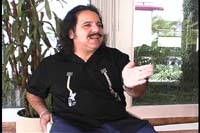
You Make the Call:
Couldn't resist this one .... Porn Star Ron Jeremy = Terror Chief Khalid Shaikh Mohammed?

March 02, 2003
Is Blogging Writing?
Chris Locke just made a post that opened up a can of worms that's been brewing in my head for a while. I consider myself a good writer, although I think I've slipped a bit recently due to the nature of my job .... putting together proposals really isn't writing in the sense that I think of it. Creativity starts lacking when you write slightly varying versions the same proposal over and over for different clients. "Professional" writing is more about the efficiency and clarity of words, not creativity.
Somehow, I feel like blogging might be making my writing worse. A professor told me once in college that there are no good writers, only good re-writers. Which makes sense because usually the first thing that is thrown down on paper sounds like crap --- it's the ideas that matter at first, then you re-write and re-write it again and again and again into Robert Frost-like prose .... or something like that. Blogging is more like a stream of consciousness -- there might be a couple read-thrus -- but I'm not out to make a masterpiece. Blogging tends to be quantity over quality. Which is why when Chris said, "writing is a sacred thing. Each word must be carefully considered, weighed, mulled over, its connotations and juxtapositional conjunction with previous words and (possible) meanings thought about deeply, agonized over," I let out a sigh of relief. This is what writing is to me. I am constantly in awe of the people who can write so well, so frequently.
So I ask the question, is blogging synonymous with writing? In the traditional sense of writing, I say no. Blogging is more like speech -- spontaneous, conversational, rough, imperfect. But like writing, it is closer to being permanently stored in history. Speech is gone once it is spoken.
I'm starting to notice that those who write for a living are the ones that blog with a unique and powerful voice. I don't think blogging can make you a better writer -- rather being a better writer will make you a better blogger. (And then there's Eric Norlin who always seems to be the exception to the rule -- I think Eric just has a clear head -- which helps his rap)
A clear head. That's another thing. There always seems to be ten things I'm trying to do at once. The Wall Street Journal had an article this week on how multi-tasking makes us less effective.
Even while I'm not actually doing 10 other things, the weight of ten other things seems to be pressuring downward in some fashion. This tends to make my blogging words with meaning, but no impact. When I write well, I need to be focused on the task at hand. My girlfriend always asks why I usually just link and quote other writers and bloggers. It usually means, God I wish I had the time and mind-set to write about that, but this will do. A reference point for myself for a later time, and maybe something my readers will like.
So, you might see fewer words here, but more meaning in the weeks to come. We'll just see how it goes.
Somehow, I feel like blogging might be making my writing worse. A professor told me once in college that there are no good writers, only good re-writers. Which makes sense because usually the first thing that is thrown down on paper sounds like crap --- it's the ideas that matter at first, then you re-write and re-write it again and again and again into Robert Frost-like prose .... or something like that. Blogging is more like a stream of consciousness -- there might be a couple read-thrus -- but I'm not out to make a masterpiece. Blogging tends to be quantity over quality. Which is why when Chris said, "writing is a sacred thing. Each word must be carefully considered, weighed, mulled over, its connotations and juxtapositional conjunction with previous words and (possible) meanings thought about deeply, agonized over," I let out a sigh of relief. This is what writing is to me. I am constantly in awe of the people who can write so well, so frequently.
So I ask the question, is blogging synonymous with writing? In the traditional sense of writing, I say no. Blogging is more like speech -- spontaneous, conversational, rough, imperfect. But like writing, it is closer to being permanently stored in history. Speech is gone once it is spoken.
I'm starting to notice that those who write for a living are the ones that blog with a unique and powerful voice. I don't think blogging can make you a better writer -- rather being a better writer will make you a better blogger. (And then there's Eric Norlin who always seems to be the exception to the rule -- I think Eric just has a clear head -- which helps his rap)
A clear head. That's another thing. There always seems to be ten things I'm trying to do at once. The Wall Street Journal had an article this week on how multi-tasking makes us less effective.
A growing body of scientific research shows one of jugglers' favorite time-saving techniques, multitasking, can actually make you less efficient and, well, stupider. Trying to do two or three things at once or in quick succession can take longer overall than doing them one at a time, and may leave you with reduced brainpower to perform each task.
Even while I'm not actually doing 10 other things, the weight of ten other things seems to be pressuring downward in some fashion. This tends to make my blogging words with meaning, but no impact. When I write well, I need to be focused on the task at hand. My girlfriend always asks why I usually just link and quote other writers and bloggers. It usually means, God I wish I had the time and mind-set to write about that, but this will do. A reference point for myself for a later time, and maybe something my readers will like.
So, you might see fewer words here, but more meaning in the weeks to come. We'll just see how it goes.
February 28, 2003
Media Slants
Check out Deborah Bransom's latest bloggings on the state of media. Very well written.
Also -- sorry about the mess on the pages from my top nav bar. Something to do with Dreamweaver ftp'ing to blogspot. I just need to work on it over the weekend.
Also -- sorry about the mess on the pages from my top nav bar. Something to do with Dreamweaver ftp'ing to blogspot. I just need to work on it over the weekend.
February 24, 2003
New York Times article on Google's acquisition of Blogger. The more I think about it, the more I think ad relevancy has a lot to do with the acquisition. Think about Google's business model for Adwords. It's all relevancy based. Now with access to Blogspot, Google can target down to the micromarket. Of course the acquisition also has a lot to do with search ... and probably news.
Subscribe to:
Posts (Atom)
